
A meeting is not the whole story
There is what happens in the room—and everything you carry into it. The questions you wanted to ask. The paperwork you are trying to understand. The worry that you will leave without being clear about what happens next.
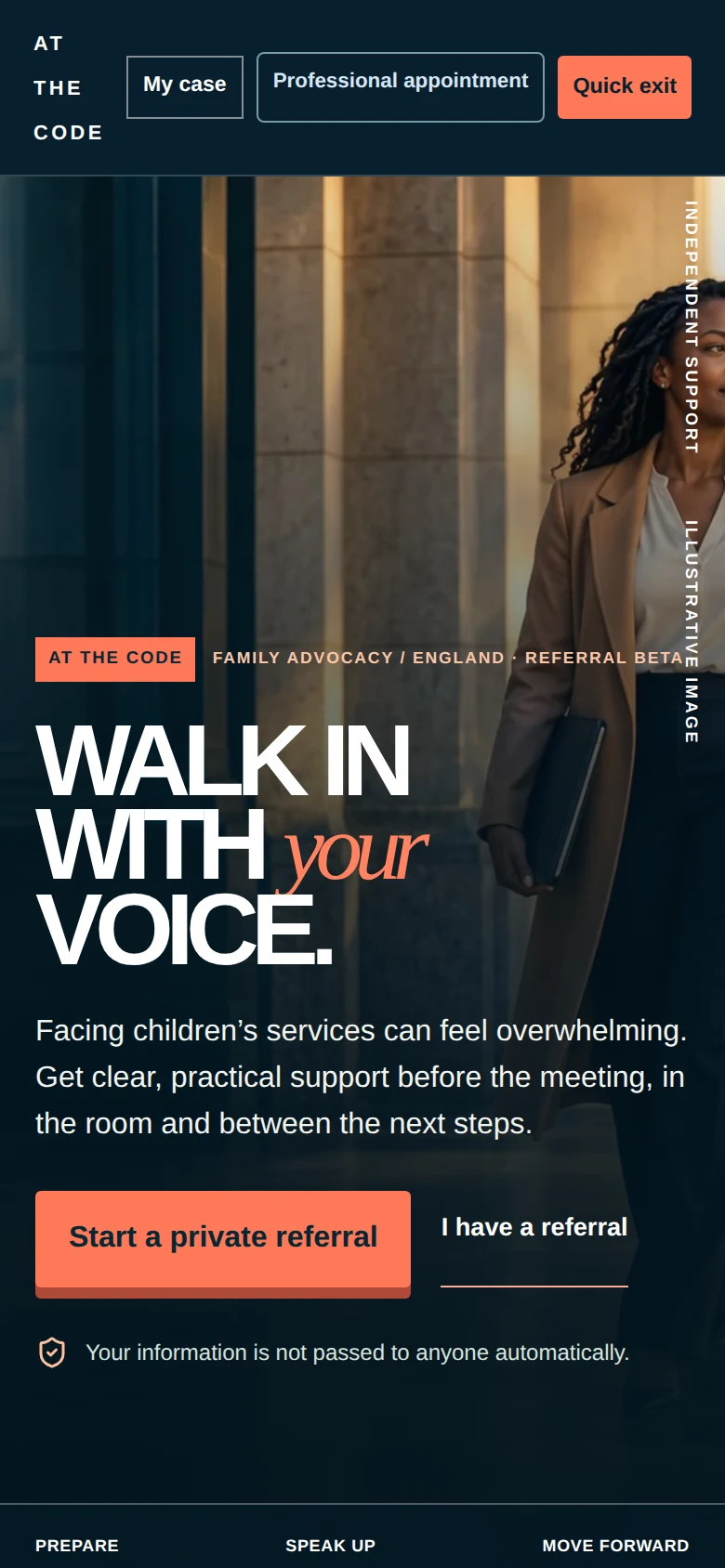
AT THE CODE Family Advocacy starts with that practical gap. Its public referral page is for adults in England dealing with children’s services, a child protection plan, the start of PLO or pre-proceedings, child contact concerns or domestic abuse. The first step is a short explanation of what is happening and the kind of help being requested.
This is the existing Family Referrals app, presented as AT THE CODE Family Advocacy—not a second intake system. Use the app itself for a referral, rather than sending case details through the magazine.
Different support. Clearer roles.
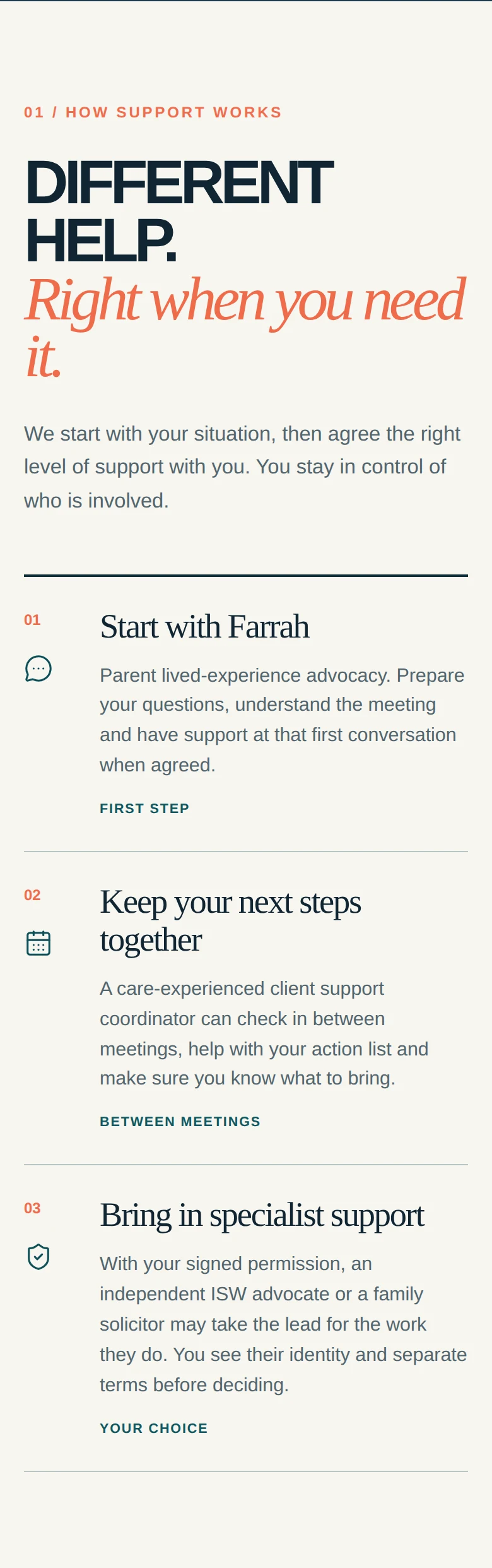
Start with Farrah
The service describes Farrah’s role as parent lived-experience advocacy: preparing questions, making sense of the next meeting and agreeing what support may help at a first conversation. Attendance is something to agree, not something the referral form automatically books.
Keep the next steps together
The approach also includes support between meetings: check-ins, an action list and preparation for the next conversation. The aim is not simply to leave with more paperwork. It is to understand what needs attention, who is doing what and which questions still need an answer.
Choose specialist help separately
An independent social-work advocate and a family solicitor have different roles. The app describes a named handover with signed permission, so a person can see who would receive their information and the separate terms before deciding. A solicitor decides whether to take a case and deals directly with questions about legal advice, fees and legal aid.
Advocacy and legal representation are not the same offer. Asking AT THE CODE for support does not mean a solicitor has accepted the case. The app states that no AT THE CODE package is required to ask about a solicitor referral. You remain free to choose your solicitor.
Start with the situation—not every private detail
The first form asks about the case stage, the concerns and the support being sought. Its brief-description box has a 400-character limit: what is happening, the next important date and what help is needed.
The instructions ask people to use Child 1, Child 2 and so on, rather than children’s names. They also ask people to leave out dates of birth, schools, addresses, case numbers and other identifying details. The adult’s contact details are collected separately.
The public page says Farrah reviews the initial request manually, uses the selected safe contact method and discusses an onward introduction first. The magazine screenshots show only public pages and an empty form—not a family’s submitted information.
What is free—and what is not booked yet?
The initial referral is free. The app displays proposed packages for preparation, first-meeting support and help between meetings. It also explicitly says those package bookings and payments are not open in this beta.
A proposed price is not a confirmed appointment. Full terms and a confirmed payment route should come before a paid booking. Independent specialists set their scope and fees separately; submitting the initial form does not buy their services.
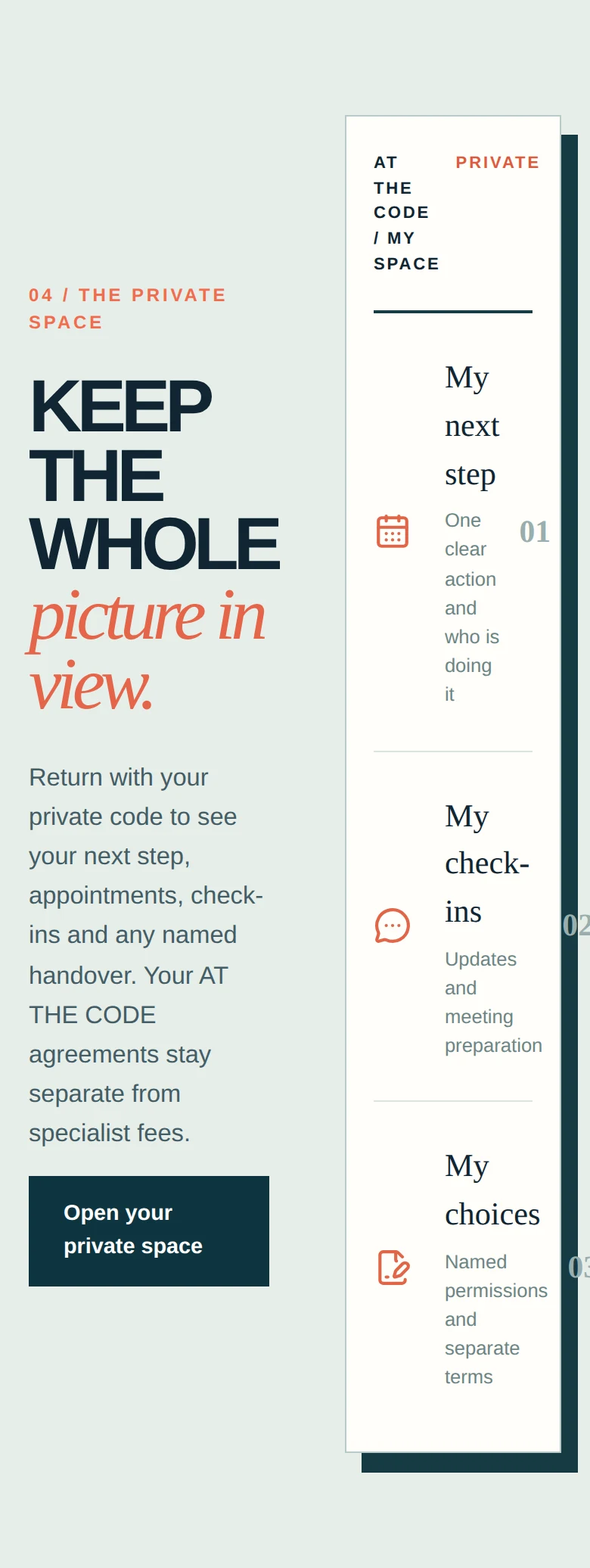
A way back to the next step
The public page introduces a private return-code route for an existing referral, alongside an explanation of next steps, appointments, check-ins and named permissions. The fourth picture shows that public explanation—not a signed-in client dashboard. The screenshots demonstrate the interface, not a completed test of a submitted referral or appointment.
HEARD is a separate choice
Sometimes someone wants practical advocacy. Sometimes they first need space to put a difficult experience into words. The Family Advocacy app links to HEARD while making clear that choosing one service does not automatically transfer information to the other.
Urgent help: the referral form and this magazine are not emergency channels. In immediate danger, contact emergency services. Do not wait for a referral review.
Source & privacy note
Service descriptions and access wording come from the public Family Advocacy page, reviewed on 8 October 2026. No referral, payment or sign-in was submitted for this feature. The welcome screen’s person is labelled as illustrative. The Signal and Family Advocacy share the AT THE CODE founder. This article introduces the service; it is not individual legal advice.
For the story behind Farrah’s work, read the free Money Without Shame sample. Buying the book is not required to make an initial referral.